Tablespoon vs Teaspoon Size: The Exact Difference Every Cook Must Know
Introduction
It happens to every home cook at least once — you’re mid-recipe and suddenly unsure: is this a tablespoon or a teaspoon? When it comes to tablespoon vs teaspoon size, the difference seems small, but getting it wrong can completely ruin a dish. Too much baking soda, too little salt, or an overdose of chili flakes — one wrong spoon choice and your recipe is off.
In this guide, we’ll break down exactly how tablespoon and teaspoon sizes compare, what the measurements mean, how to convert between them, and how to tell them apart quickly in any kitchen.
Tablespoon vs Teaspoon Size: The Core Numbers
| Feature | Tablespoon (tbsp) | Teaspoon (tsp) |
|---|---|---|
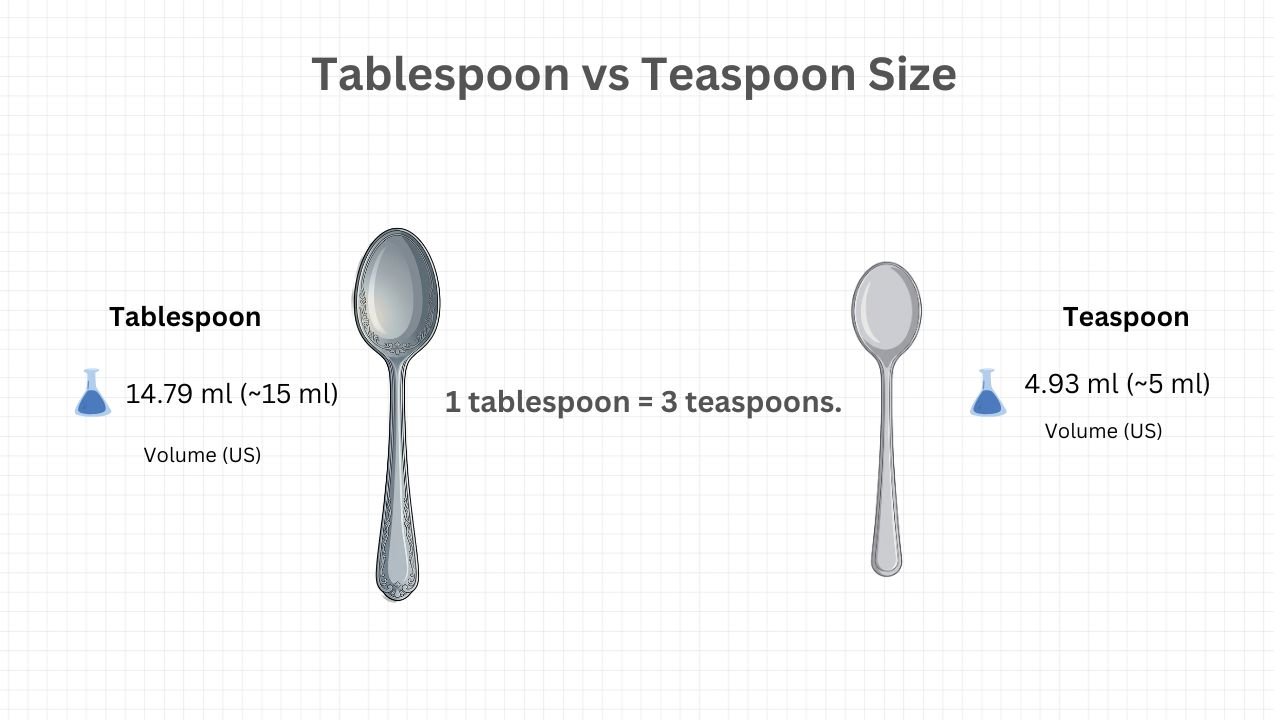
| Volume (US) | 14.79 ml (~15 ml) | 4.93 ml (~5 ml) |
| Volume (UK/Canada) | 15 ml | 5 ml |
| Volume (Australia) | 20 ml | 5 ml |
| In teaspoons | 3 teaspoons | 1 teaspoon |
| In tablespoons | 1 tablespoon | ⅓ tablespoon |
| Abbreviation | tbsp / T / Tbs | tsp / t |
| Visual Size | Larger, wider bowl | Smaller, narrower bowl |
The single most important number to remember: 1 tablespoon = 3 teaspoons. The tablespoon is exactly three times the size of a teaspoon — making it the most useful conversion in everyday cooking and baking.
⚠️ Australian cooks take note: Australia uses a 20 ml tablespoon (not 15 ml), which means Australian tablespoon measurements are larger than US and UK equivalents. Always check your recipe’s country of origin.
How to Tell Them Apart Visually
If your measuring spoons aren’t labeled, here’s how to instantly identify them:
- Tablespoon — noticeably larger, wider, deeper bowl; holds a generous mound of ingredient
- Teaspoon — smaller, narrower, shallower bowl; more compact and delicate in size
- In a standard set of measuring spoons, the tablespoon is always the biggest spoon in the set
A quick memory trick that never fails: Tablespoon starts with a capital T — and it’s the bigger of the two. teaspoon starts with a lowercase t — it’s the smaller one. This is actually why recipes use T for tablespoon and t for teaspoon in shorthand.
Tablespoon vs Teaspoon: Volume Comparison at a Glance
| Measurement | Teaspoons | Tablespoons | Millilitres |
|---|---|---|---|
| 1 teaspoon | 1 tsp | ⅓ tbsp | ~5 ml |
| 1 tablespoon | 3 tsp | 1 tbsp | ~15 ml |
| 2 tablespoons | 6 tsp | 2 tbsp | ~30 ml |
| ¼ cup | 12 tsp | 4 tbsp | ~60 ml |
| ½ cup | 24 tsp | 8 tbsp | ~120 ml |
This table is a lifesaver when you’re scaling recipes up or down and don’t have the exact spoon size handy.
When to Use a Tablespoon vs Teaspoon
Use a Tablespoon for:
- Oils and fats — olive oil, butter, coconut oil
- Sauces and liquids — soy sauce, Worcestershire, vinegar, honey
- Bulk dry ingredients — flour (small additions), sugar, cocoa powder
- Condiments — mayonnaise, mustard, peanut butter
- Serving small portions — jam, cream, dressings
Use a Teaspoon for:
- Baking agents — baking soda, baking powder, yeast
- Strong spices — cumin, turmeric, chili powder, cinnamon
- Salt and pepper — precise seasoning
- Vanilla extract — a little goes a long way
- Medications — liquid doses for children and adults
- Tea and coffee — measuring loose leaf tea or instant coffee
The key principle: teaspoons are for potent ingredients where precision matters most. A tablespoon of baking soda instead of a teaspoon will completely destroy a cake. A tablespoon of chili powder instead of a teaspoon will make a dish inedibly hot. The smaller the spoon, the more critical the accuracy.
Why Getting It Right Matters in Baking
Cooking is forgiving — you can add a little extra olive oil or a touch more soy sauce and the dish will still work. Baking is chemistry — and tablespoon vs teaspoon errors are the most common reason baked goods fail.
| Ingredient | Correct Amount | What Goes Wrong If You Use tbsp Instead of tsp |
|---|---|---|
| Baking soda | 1 tsp | Bitter, soapy taste; over-risen then collapsed |
| Baking powder | 1–2 tsp | Metallic taste; dense or collapsed texture |
| Salt | ½–1 tsp | Overpoweringly salty |
| Vanilla extract | 1 tsp | Overly perfumed, medicinal flavor |
| Yeast | 1 tsp | Over-proofing, collapsed bread |
Accuracy with small measurements — especially in baking — is the difference between a recipe that works beautifully and one that ends up in the bin.
No Measuring Spoons? Here’s What to Do
Sometimes you’re in the middle of cooking and can’t find your measuring spoons. Here are some practical size references:
- 1 teaspoon ≈ the size of the tip of your index finger, or roughly the amount that fits in a standard medicine spoon
- 1 tablespoon ≈ roughly half a standard dinner spoon, or 3 finger-tip sized portions
- 1 tablespoon ≈ a large ice cube’s worth of liquid (approximately)
- 3 level teaspoons of any ingredient = exactly 1 tablespoon — use a teaspoon three times if that’s all you have
Tablespoon vs Teaspoon in Different Countries
| Country | Tablespoon Size | Teaspoon Size |
|---|---|---|
| United States | 14.79 ml | 4.93 ml |
| United Kingdom | 15 ml | 5 ml |
| Australia | 20 ml | 5 ml |
| Canada | 15 ml | 5 ml |
| Metric standard | 15 ml | 5 ml |
The US, UK, and Canada are essentially standardized at 15 ml for a tablespoon. Australia is the notable exception at 20 ml — which means if you’re following an Australian recipe and using a US tablespoon, you’re using 25% less than intended. For baking especially, this matters.
Quick Reference Cheat Sheet
✅ 1 tbsp = 3 tsp = 15 ml
✅ 1 tsp = ⅓ tbsp = 5 ml
✅ Tablespoon = bigger spoon = capital T
✅ Teaspoon = smaller spoon = lowercase t
✅ Australia = 20 ml tablespoon (larger than the rest)
Conclusion
Understanding tablespoon vs teaspoon size is one of the most fundamental kitchen skills there is — and yet it trips up even experienced cooks. The tablespoon is three times the size of a teaspoon, and that ratio is the one number worth memorizing above all else. Whether you’re baking a cake, seasoning a curry, mixing a cocktail, or measuring out a medicine dose, knowing exactly which spoon to reach for — and why — makes every recipe more accurate, consistent, and stress-free.
Keep a reliable set of labeled measuring spoons in your kitchen drawer, bookmark this page as your conversion reference, and you’ll never mix them up again.