Crocs vs Alligators Size: What’s the Real Difference?
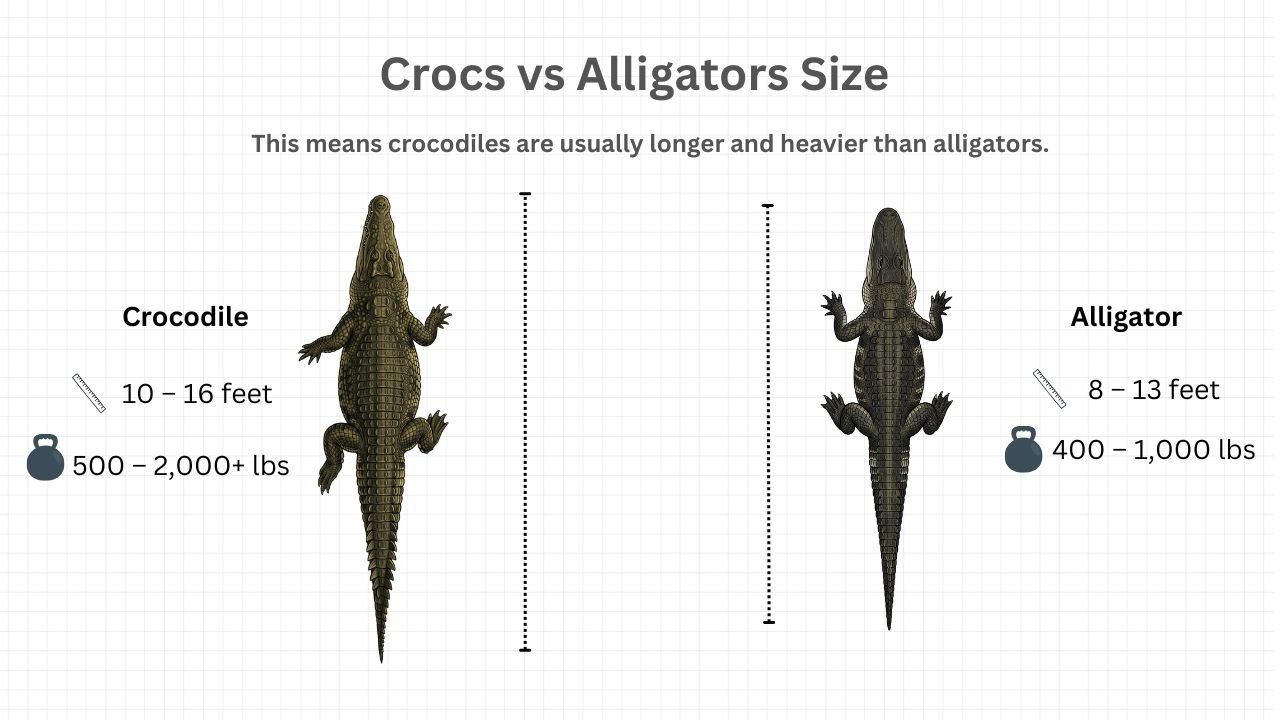
Crocodiles and alligators are often confused because they look similar and belong to the same reptile family. But when it comes to size, there are clear differences that set them apart. Understanding these differences helps in identifying them in the wild, learning about their behavior, and appreciating how these animals evolved.
This guide explains crocodile vs alligator size in a simple and detailed way, with clear comparisons and tables.
Quick Comparison Table
| Feature | Crocodiles | Alligators |
|---|---|---|
| Average Length | 10 – 16 feet | 8 – 13 feet |
| Maximum Length | Up to 20+ feet | Up to 15 feet |
| Average Weight | 500 – 2,000+ lbs | 400 – 1,000 lbs |
| Largest Species | Saltwater crocodile | American alligator |
| Overall Size | Generally larger | Slightly smaller |
Average Size Difference
Crocodiles are typically larger than alligators.
- Most crocodiles grow between 10 to 16 feet
- Most alligators grow between 8 to 13 feet
This means crocodiles are usually longer and heavier than alligators.
Maximum Size Comparison
Some crocodiles can grow to extreme sizes.
Crocodiles
- Can exceed 20 feet in length
- Weigh over 2,000 pounds
Alligators
- Rarely exceed 15 feet
- Usually stay under 1,000 pounds
Largest Recorded Sizes
| Animal | Length | Weight |
|---|---|---|
| Largest crocodile | ~23 feet | 2,000+ lbs |
| Largest alligator | ~15 feet | ~1,000 lbs |
Crocodiles clearly dominate in maximum size.
Why Are Crocodiles Bigger?
Several factors contribute to this size difference:
1. Species Variety
There are more crocodile species worldwide, including very large ones like the saltwater crocodile.
2. Habitat Range
Crocodiles live in both freshwater and saltwater environments, allowing access to more food sources.
3. Evolutionary Adaptation
Crocodiles evolved to survive in more diverse environments, which supports larger body sizes.
Growth Rate Comparison
| Factor | Crocodiles | Alligators |
|---|---|---|
| Growth Speed | Faster | Moderate |
| Lifespan | 70–100 years | 35–50 years |
| Size Potential | Higher | Lower |
Crocodiles not only grow larger but also tend to live longer, giving them more time to reach massive sizes.
Male vs Female Size Difference
In both species:
- Males are significantly larger than females
- Female size is usually 20–30% smaller
| Gender | Crocodiles Size | Alligators Size |
|---|---|---|
| Male | Much larger | Larger |
| Female | Smaller | Smaller |
Habitat and Size Impact
| Habitat Type | Crocodiles | Alligators |
|---|---|---|
| Saltwater | Yes (common) | No |
| Freshwater | Yes | Yes |
| Geographic Range | Africa, Asia, Australia | USA, China |
Access to larger ecosystems often contributes to crocodiles reaching bigger sizes.
Visual Size Comparison Summary
| Aspect | Bigger Animal |
|---|---|
| Length | Crocodile |
| Weight | Crocodile |
| Maximum Size | Crocodile |
| Bulk/Body | Crocodile |
Final Verdict
Crocodiles are generally larger, longer, and heavier than alligators. While both are powerful predators, crocodiles have the advantage in overall size due to their wider habitat range, longer lifespan, and evolutionary traits.
If you remember just one thing:
- Crocodiles = Bigger and longer
- Alligators = Smaller but still powerful
Understanding this difference makes it easier to identify and compare these fascinating reptiles.