Crib vs Twin Mattress Size: Dimensions, Differences, and Which One Should You Choose?
When setting up a nursery or transitioning your child to a bigger bed, one of the most common questions parents ask is: What is the difference between a crib mattress and a twin mattress? While both are designed for sleeping, they differ significantly in size, thickness, intended use, and lifespan.
In this guide, we’ll compare crib and twin mattress sizes, discuss their pros and cons, and help you determine which mattress is best for your child’s age and needs.
Crib Mattress vs Twin Mattress: Quick Comparison
| Feature | Crib Mattress | Twin Mattress |
|---|---|---|
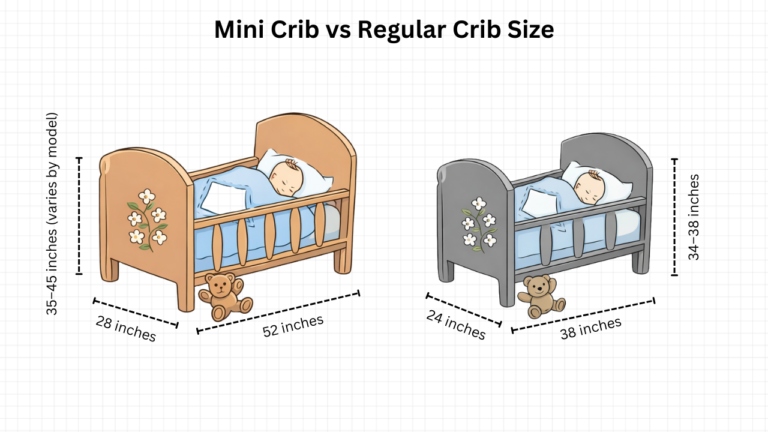
| Standard Width | 28 inches (71 cm) | 38 inches (97 cm) |
| Standard Length | 52 inches (132 cm) | 75 inches (191 cm) |
| Surface Area | 1,456 sq in | 2,850 sq in |
| Typical Thickness | 4–6 inches | 6–14 inches |
| Recommended Age | Infants and toddlers | Children, teens, and adults |
| Fits In | Cribs and toddler beds | Twin bed frames |
| Lifespan | Birth to 3–5 years | 5+ years |
Crib Mattress Dimensions
A standard crib mattress measures:
- Width: 28 inches (71 cm)
- Length: 52 inches (132 cm)
According to safety standards, crib mattresses are designed to fit snugly inside a standard crib with minimal gaps around the edges. This helps reduce safety risks for infants.
Most crib mattresses are relatively firm because babies require a stable sleeping surface that supports healthy development and reduces suffocation hazards.
Pros of Crib Mattresses
- Specifically designed for infants.
- Fits standard cribs and toddler beds.
- Firm surface improves safety.
- Lightweight and easy to move.
- Waterproof options are widely available.
Cons of Crib Mattresses
- Limited sleeping space.
- Usually outgrown by age 3–5.
- Not suitable for older children.
- Cannot be used on standard bed frames.
Twin Mattress Dimensions
A standard twin mattress measures:
- Width: 38 inches (97 cm)
- Length: 75 inches (191 cm)
Twin mattresses are the smallest standard adult-size mattresses available. They are commonly used in children’s bedrooms, guest rooms, bunk beds, dormitories, and small apartments.
Compared to crib mattresses, twin mattresses provide significantly more sleeping space and can accommodate children through their teenage years.
Pros of Twin Mattresses
- Suitable for children, teens, and adults.
- Long lifespan.
- Available in many comfort levels.
- Fits bunk beds and standard bed frames.
- More room for movement during sleep.
Cons of Twin Mattresses
- Requires more bedroom space.
- More expensive than crib mattresses.
- Heavier and harder to move.
- Not suitable for infants without proper safety measures.
Size Difference Between Crib and Twin Mattresses
The most noticeable difference is the overall size.
Width Difference
Twin mattress width:
A twin mattress is 10 inches wider than a crib mattress.
Length Difference
Twin mattress length:
A twin mattress is 23 inches longer than a crib mattress.
Surface Area Comparison
Crib mattress area:
Twin mattress area:
Difference:
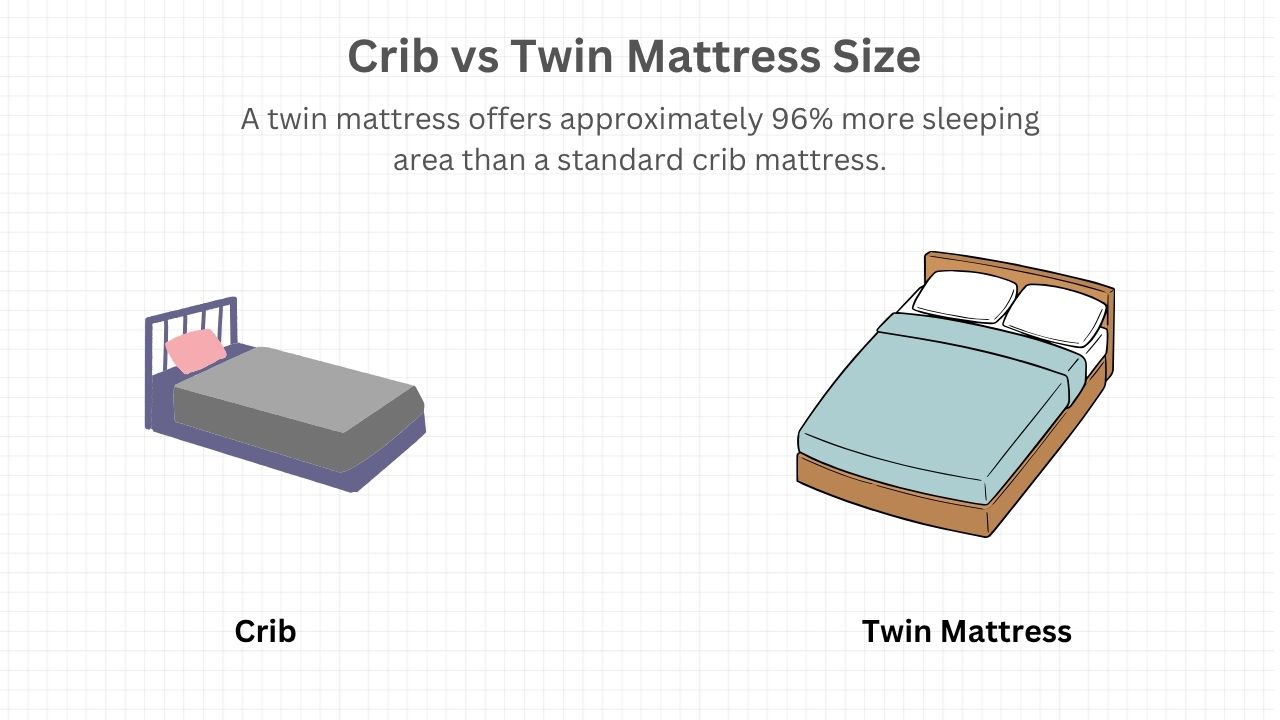
A twin mattress offers approximately 96% more sleeping area than a standard crib mattress.
Can a Crib Mattress Fit a Twin Bed?
No, A crib mattress is significantly smaller than a twin bed frame. Placing a crib mattress on a twin frame would leave large gaps around the edges, making it unsafe and uncomfortable.
Can a Twin Mattress Fit in a Crib?
No, A twin mattress is far too large for a standard crib. It will not fit inside the crib frame.
When Should You Transition from a Crib Mattress to a Twin Mattress?
Most children move from a crib mattress to a twin mattress between ages 2 and 5 years. The ideal timing depends on:
- Your child’s height.
- Whether they are climbing out of the crib.
- Available bedroom space.
- Family preference.
Many parents first transition to a toddler bed that uses the same crib mattress before upgrading to a twin bed.
Cost Comparison
Crib Mattress
Typical price range:
- Budget: $50–$100
- Mid-range: $100–$200
- Premium: $200–$400+
Twin Mattress
Typical price range:
- Budget: $100–$250
- Mid-range: $250–$700
- Premium: $700–$2,000+
Twin mattresses generally cost more because they use additional materials and provide a much larger sleeping surface.
Which Mattress Should You Choose?
Choose a Crib Mattress If:
- Your baby is under 3 years old.
- You need a mattress for a crib or toddler bed.
- Safety for infants is your top priority.
- You want a compact and lightweight mattress.
Choose a Twin Mattress If:
- Your child has outgrown a crib.
- You want a long-term mattress solution.
- Your child needs more sleeping space.
- You’re furnishing a child’s bedroom or guest room.
Crib Mattress vs Twin Mattress: Final Verdict
A crib mattress and a twin mattress serve very different purposes. A standard crib mattress measures 28 × 52 inches, making it ideal for infants and toddlers, while a twin mattress measures 38 × 75 inches, providing nearly twice the sleeping area.
For newborns and young toddlers, a crib mattress is the safest and most practical option. Once your child begins outgrowing the crib or transitioning to a larger bed, a twin mattress becomes the better long-term investment due to its larger size, comfort options, and extended usability.
If you’re deciding between the two, the choice largely depends on your child’s age, size, and future sleeping needs.