Midsize vs Full Size Suv: What’s the Difference?
When shopping for a car, SUV, truck, or even rental vehicle, you’ll often see terms like “midsize” and “full size.” While both categories are popular, they differ in dimensions, passenger space, fuel economy, comfort, and price.
In this guide, we’ll compare midsize vs full size vehicles to help you decide which option fits your lifestyle and budget.
What Does Midsize Mean?
A midsize vehicle sits between compact and full size categories.
Midsize cars and SUVs are designed to offer:
- comfortable seating
- decent cargo space
- better fuel economy
- easier parking and driving
Common examples include:
- Toyota Camry
- Honda Accord
- Nissan Altima
Midsize SUVs include:
- Honda Passport
- Hyundai Santa Fe
- Jeep Grand Cherokee
What Does Full Size Mean?
A full size vehicle is larger, roomier, and usually more powerful.
Full size vehicles focus on:
- maximum passenger space
- larger cargo capacity
- stronger engines
- towing capability
- long-distance comfort
Common examples include:
- Chevrolet Impala
- Dodge Charger
- Toyota Avalon
Full size SUVs include:
- Chevrolet Tahoe
- Ford Expedition
- GMC Yukon
Midsize vs Full Size Dimensions
Here’s a general size comparison.
| Feature | Midsize Vehicle | Full Size Vehicle |
|---|---|---|
| Passenger Space | Moderate | Large |
| Cargo Space | Good | Excellent |
| Length | Smaller | Longer |
| Width | Narrower | Wider |
| Seating Comfort | Comfortable | More spacious |
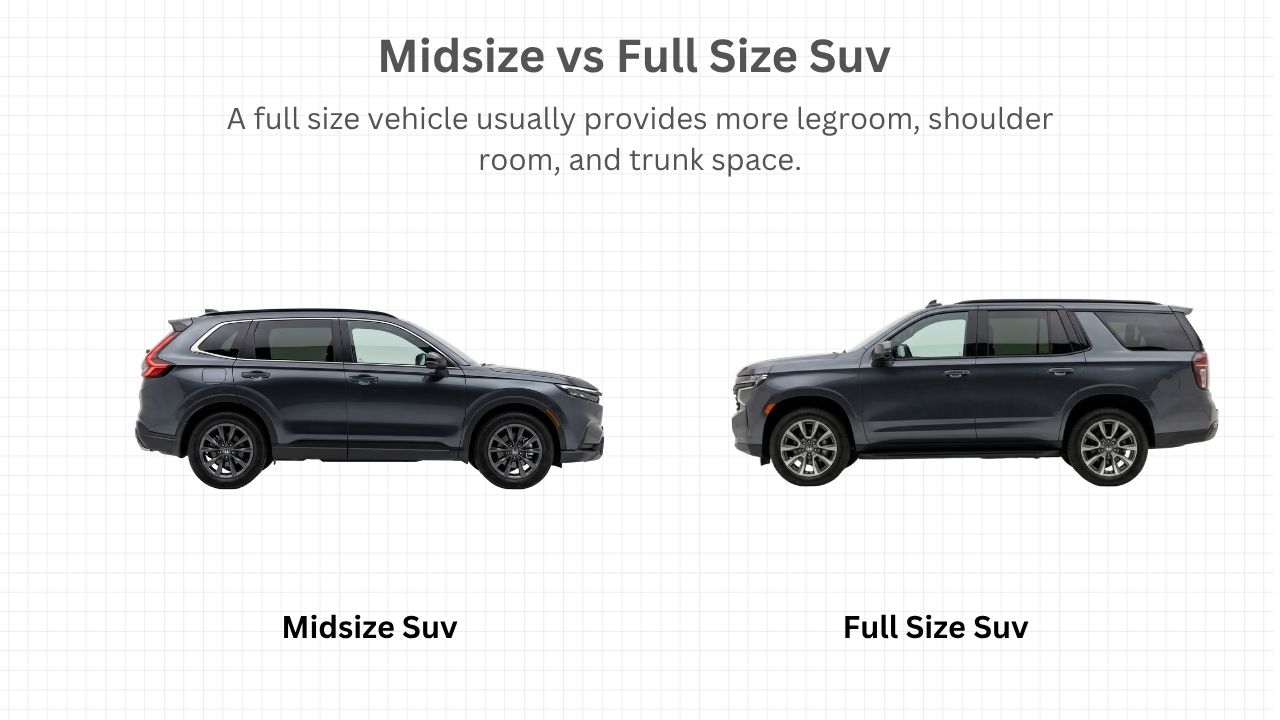
A full size vehicle usually provides more legroom, shoulder room, and trunk space.
Fuel Economy Comparison
One major difference is fuel efficiency.
| Vehicle Type | Average MPG |
|---|---|
| Midsize | Better fuel economy |
| Full Size | Lower fuel economy |
Midsize vehicles are lighter and use smaller engines, which helps save fuel.
Full size vehicles often have:
- V6 or V8 engines
- larger bodies
- more weight
This increases fuel consumption.
Midsize vs Full Size for Families
Midsize Vehicles
Best for:
- small families
- daily commuting
- city driving
- occasional road trips
Full Size Vehicles
Best for:
- large families
- long road trips
- carrying lots of luggage
- towing trailers or boats
If you regularly travel with 5–7 passengers, a full size SUV may feel much more comfortable.
Parking and Driving Experience
Midsize Advantages
- easier to park
- better maneuverability
- easier in traffic
- more suitable for urban driving
Full Size Advantages
- smoother highway ride
- more road presence
- better visibility in some SUVs and trucks
However, full size vehicles may feel difficult to park in tight city spaces.
Interior Comfort Comparison
Full size vehicles usually offer:
- wider seats
- larger rear seating area
- extra cargo room
- more premium features
Midsize vehicles still provide excellent comfort, but space may feel tighter for taller passengers.
Towing and Performance
If towing matters, full size vehicles are often the better choice.
| Feature | Midsize | Full Size |
|---|---|---|
| Towing Capacity | Lower | Higher |
| Engine Power | Moderate | Stronger |
| Payload Capacity | Lower | Higher |
Full size trucks and SUVs are designed for heavier loads and larger trailers.
Price Difference
Midsize Vehicles
Usually:
- cheaper to buy
- lower insurance cost
- lower maintenance cost
- better fuel savings
Full Size Vehicles
Usually:
- more expensive
- higher fuel cost
- larger maintenance expenses
Budget-conscious buyers often prefer midsize models.
Which Is Better for Road Trips?
Choose Midsize If:
- you travel with fewer passengers
- fuel economy matters
- you want easier handling
Choose Full Size If:
- comfort is your top priority
- you carry lots of luggage
- you drive long highway distances frequently
Midsize vs Full Size Rental Cars
Rental companies also use these categories.
Midsize Rental Car
Usually seats:
- 4–5 passengers
Good for:
- business trips
- couples
- solo travelers
Full Size Rental Car
Usually seats:
- 5 adults comfortably
Good for:
- family travel
- airport luggage
- long-distance driving
Who Should Buy a Midsize Vehicle?
A midsize vehicle is ideal if you:
- commute daily
- want better gas mileage
- live in a city
- prefer easier parking
- have a moderate budget
Who Should Buy a Full Size Vehicle?
A full size vehicle is better if you:
- need maximum space
- travel with large families
- tow heavy loads
- prioritize comfort
- frequently take long road trips
Final Verdict
The best choice depends on your lifestyle.
- A midsize vehicle offers better fuel economy, easier driving, and lower ownership costs.
- A full size vehicle provides more space, comfort, and towing power.
For most everyday drivers, midsize vehicles deliver the best balance between practicality and affordability. But if passenger space and hauling ability matter most, a full size vehicle is often worth the extra cost.
Frequently Asked Questions
Is a midsize car big enough for a family?
Yes. Most midsize cars comfortably fit 4–5 passengers.
Are full size vehicles safer?
They often feel safer due to larger size and weight, but safety also depends on technology and crash ratings.
Is a midsize SUV smaller than a full size SUV?
Yes. Full size SUVs are noticeably larger in length, width, and cargo space.
Which is easier to drive?
Midsize vehicles are generally easier to maneuver and park.